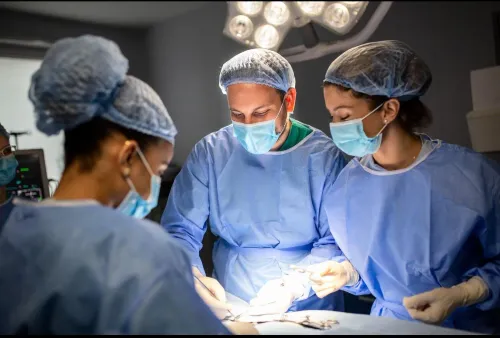
Laparoscopy is an operating approach, not the name of one fixed procedure or a standard package. You need to know which operation is proposed, what tests and anaesthesia it requires, what recovery involves, and which costs and safety arrangements are included before you consent.
Key takeaways
- Expect consultation, tests, consent, surgery, discharge instructions and follow-up.
- Ask which laparoscopic procedure, anaesthesia plan and recovery timeline apply to you.
- Compare laparoscopic, open and robotic surgery by safety, complexity and clinical need.
- Check the surgeon’s training, hospital facilities, emergency support and total treatment plan.
From first consultation to follow-up: what the care pathway includes
The search phrase laparoscopic surgery what is included in pune refers to a care pathway, not one standard package. Laparoscopy uses small abdominal incisions, a camera called a laparoscope, carbon dioxide to create working space, and long instruments, usually under general anaesthesia.
The diagnosis determines whether you need gallbladder removal, hernia repair, appendectomy, colorectal surgery, bariatric surgery or another operation.
Your pathway usually includes:
- Consultation: review symptoms, previous operations, medicines, allergies and examination findings.
- Investigation review: bring ultrasound, CT, MRI, endoscopy, blood-test and previous discharge reports; further tests may be ordered.
- Planning: confirm the proposed operation, alternatives, expected admission, possible conversion to open surgery and important risks.
- Pre-anaesthesia assessment: receive fasting instructions and a plan for blood thinners, diabetes medicines and smoking cessation where relevant.
- Practical preparation: arrange transport and home support, and understand expected restrictions on driving, work, exercise and lifting.
- Operation and monitoring: sterile preparation, port placement, treatment with the camera and instruments, wound closure, recovery-room observation and ward monitoring.
Before discharge, ask about wound care, showering, pain medicines, warning signs, diet progression and when to resume activity. Charges can separate the surgeon’s fee from hospital, anaesthesia, pathology, medicines and follow-up costs.
Recovery includes a scheduled review, pathology discussion when tissue was removed, and instructions for contacting the team if fever, worsening pain, vomiting, breathlessness or wound problems develop.
What happens during a laparoscopy consultation in Pune?
Bring every report that could change the decision, including ultrasound, CT or MRI scans, endoscopy or colonoscopy results, blood-test reports, discharge summaries and previous operation notes. Carry a current medicine list with doses, allergy details and information about blood thinners or diabetes medicines.
A laparoscopy consultation in Pune starts with your symptoms and medical history, followed by an examination and review of your scans. Describe when the problem began, where the pain occurs, vomiting, fever, bowel or urinary changes, weight loss, previous abdominal operations and any earlier anaesthesia problems. Do not minimise symptoms because they seem unrelated.
Use this checklist during the appointment:
- Ask for the exact proposed operation, not simply “laparoscopy,” and ask why it fits your diagnosis.
- Ask whether the plan could change to open surgery and what would trigger that decision.
- For hernia repair, ask whether mesh is recommended, where it will be placed, and how recurrence or chronic pain will be managed.
- Ask about bleeding, infection, organ injury, blood clots, anaesthesia problems, port-site hernia and carbon-dioxide complications.
- Confirm fasting times, medicine changes, smoking instructions, admission length, transport, home support, lifting limits, wound care, diet, pathology results and follow-up.
- Ask who will provide anaesthesia, the surgeon’s experience with your specific operation, and what happens if you need a longer admission or reoperation.
You may need blood tests or further imaging before consent and scheduling.
Which laparoscopic surgery options could be offered?
Laparoscopic surgery options in Pune range from a diagnostic examination to complex bowel or weight-loss operations. Laparoscopy is the access route; the diagnosis, disease extent, previous operations and your fitness for general anaesthesia determine whether it is suitable.
| Operation | What it treats or examines | Suitability depends on |
|---|---|---|
| Diagnostic laparoscopy | Unexplained abdominal or pelvic findings, or disease staging | Whether scans and endoscopy have not answered the clinical question |
| Gallbladder removal | Gallstones, inflammation or related complications | Gallbladder disease, anatomy and infection severity |
| Appendectomy | Inflamed or perforated appendix | Appendix condition, infection spread and overall stability |
| Inguinal or ventral hernia repair | Groin or abdominal-wall hernias | Hernia size, location, recurrence and previous mesh or surgery |
| Colorectal resection | Diseased sections of the colon or rectum | Tumour or inflammation location, bowel involvement and surgical complexity |
| Bariatric surgery | Procedures such as sleeve gastrectomy or gastric bypass | Weight-related health risks, previous surgery and suitability for long-term follow-up |
| Reflux or hiatus-hernia surgery | Reflux caused by a hiatus hernia or faulty valve mechanism | Endoscopy, reflux testing, hernia anatomy and symptom pattern |
Your surgeon may recommend an open operation instead if the disease is extensive, anatomy is unclear, severe inflammation limits safe access, or bleeding occurs during laparoscopy. Ask which operation is proposed, why the minimally invasive route fits your findings, and when conversion to open surgery would be necessary.
Laparoscopic, open or robotic: how is the approach selected?
The approach is selected for the disease, anatomy, previous operations and surgeon’s ability to complete the procedure safely—not simply by choosing the newest technology. Minimally invasive surgery in Pune includes laparoscopic and robotic operations; robotic surgery is surgeon-controlled, not an autonomous robot.
| Approach | Incisions | Operating time | Recovery | Cost and safety |
|---|---|---|---|---|
| Laparoscopic | Several small cuts, usually for a camera and long instruments | Can take longer than open surgery because access and instrument handling are more technical | Often less wound pain, a shorter stay and earlier activity, depending on the operation | Equipment can raise the cost. It is safe when visibility and instrument access are adequate |
| Open | One larger incision directly exposing the operative area | Can be faster for complex access or urgent bleeding | Usually more wound healing, pain, lifting restrictions and recovery time | May cost less than robotic surgery, but a longer admission can affect the total bill. It remains the safest route when direct access is needed |
| Robotic | Several small cuts for articulated instruments controlled from a console | Can be longer because of docking and preparation | Similar minimally invasive recovery, with no guaranteed advantage over laparoscopy | Usually costs more because of specialised equipment. It is not automatically safer or better for every case |
Dense adhesions, advanced disease, difficult anatomy, poor visibility or uncontrolled bleeding can require conversion from laparoscopy or robotic surgery to open surgery. Conversion protects you; it is not necessarily a failure. Ask about the specific procedure, the surgeon’s current experience, expected conversion rates and the complete cost, including equipment, anaesthesia and extra hospital days.
How to compare a laparoscopic surgeon and hospital in Pune
A laparoscopic surgeon in Pune should be judged by experience with your specific operation, not by a generic “minimally invasive” label. Ask how often the surgeon performs that procedure, who gives the anaesthetic, and what happens if laparoscopy must be converted to open surgery.
- Confirm that the hospital has 24-hour emergency cover, blood-bank access, intensive-care support and a surgeon available if bleeding, infection or an organ injury occurs.
- Request a written estimate separating the surgeon’s fee, operating-room and bed charges, anaesthesia, medicines, pathology, investigations and follow-up. Ask what extra admission or reoperation could cost.
- Ask for operation-specific risks, including bleeding, bowel or bladder injury, blood clots, anaesthesia problems, port-site hernia and carbon-dioxide complications. Request conversion and complication rates when the surgeon records them.
- Clarify the discharge date, wound review, pathology discussion, activity restrictions and the contact number for urgent symptoms. Ask who manages a complication after discharge.
Check each decision point before booking:
| Area | Verify | Warning sign |
|---|---|---|
| Surgeon | Current experience with your operation and relevant case outcomes | Only broad claims about “keyhole” expertise |
| Hospital | Emergency theatre, ICU, anaesthesia and overnight monitoring | No clear escalation plan |
| Charges | Itemised estimate and insurance exclusions | One bundled figure with no inclusions |
| Follow-up | Named review schedule and 24-hour advice | No plan after discharge |
Dr Kulkarni- Advanced LAPAROSCOPY, Colorectal & ROBOTIC Surgery Clinic can be included in your comparison when you ask these same questions about operation-specific experience, hospital arrangements, total charges and complication follow-up.
Related services
Advanced LAPAROSCOPY, Colorectal & ROBOTIC Surgery Advanced LAPAROSCOPY, Colorectal & ROBOTIC Surgery Advanced Laparoscopic, Colorectal & Robotic Surgery Services by Dr. Suprashant Kulkarni Dr. View service → |
GI Surgery by Dr. Suprashant D. Kulkarni GI Surgery by Dr. Suprashant D. Kulkarni Consultant – Laparoscopic & General Surgery Dr. Suprashant D. View service → |
Frequently asked questions
What does laparoscopic surgery in Pune include?
The care pathway includes an initial consultation, medical history and examination, diagnostic tests, procedure planning, informed consent, anaesthesia, surgery, discharge instructions and follow-up.
What happens during a laparoscopy consultation in Pune?
The surgeon reviews your symptoms, previous operations, medicines, allergies and test results, examines you, explains suitable procedures, discusses risks and recovery, and answers questions about preparation and costs.
Which laparoscopic surgery options could be offered?
Options depend on the diagnosis and can include gallbladder surgery, hernia repair, colorectal procedures, bariatric surgery and other abdominal operations. The surgeon recommends a procedure after assessment.
How are laparoscopic, open and robotic approaches selected?
The choice depends on the operation, anatomy, disease extent, previous surgery, safety and the surgeon’s judgement. Robotic surgery is not automatically better, and open surgery remains appropriate for some cases.
How should you compare a laparoscopic surgeon and hospital in Pune?
Check the surgeon’s relevant training and experience, the hospital’s anaesthesia and operating-room facilities, intensive-care and emergency support, infection-control practices, transparent estimates and planned follow-up.
Related service
Pancreatic Dsease Diagnosis and Treatment in Pune Pancreatic Dsease Diagnosis and Treatment in Pune Pancreatic Disease Diagnosis & Treatment in Pune By Dr. Suprashant D. View service → |