Despite remarkable advances in surgical technology, robotic surgery continues to be surrounded by misconceptions—not only among non medical population , but even among some medical professionals.
Robots are often perceived as expensive, experimental, or autonomous machines, rather than precise tools that enhance a surgeon’s capabilities under direct human control.
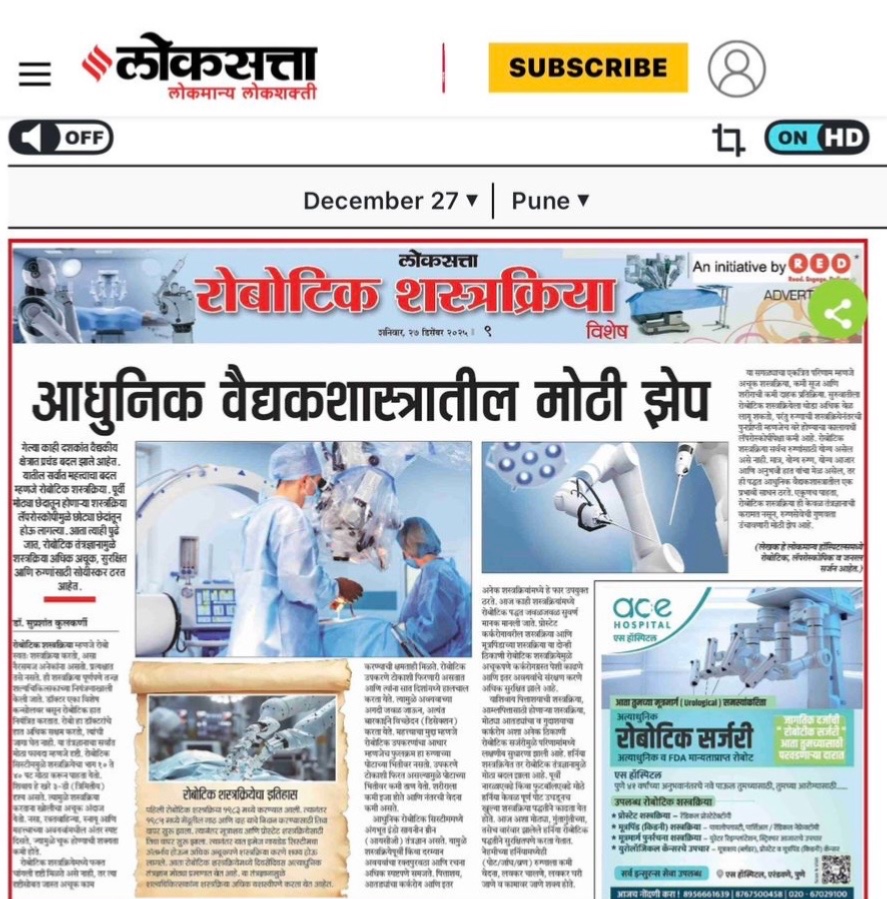
In my article published in Loksatta today, I address these myths and explain the true role of robotic platforms in present-day surgical practice.
Far from being a luxury, robotic surgery has emerged as a powerful enabler of precision, safety, and reproducibility in complex procedures across multiple specialties.
One of the most tangible benefits for patients is improved recovery. Reduced tissue trauma, superior visualization, and refined ergonomics translate into less postoperative pain, lower inflammatory response, fewer wound-related complications, and faster mobilisation. For many patients, this means shorter hospital stays and an earlier return to normal activity.
Importantly, when viewed through the lens of outcomes rather than upfront costs alone, robotic surgery can be highly cost-effective—especially for individuals who need to resume work early, minimise loss of productivity, and avoid prolonged postoperative discomfort. Faster recovery, fewer complications, and reduced need for prolonged analgesia or hospitalisation often offset the initial procedural costs.
Robotic surgery is not meant for every patient or every operation. However, in appropriately selected cases and in experienced hands, it represents a significant advancement in patient-centred surgical care. This article aims to bring clarity, evidence, and perspective to an evolving field that is redefining the future of surgery.