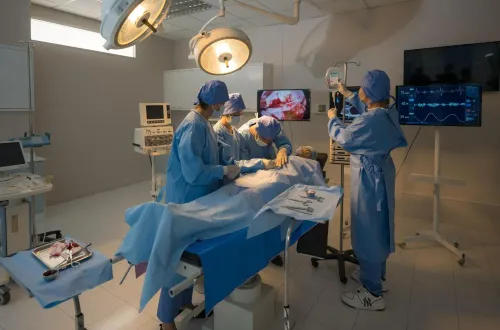

Pancreatic treatment begins with triage, a focused history and examination, then targeted blood tests and imaging rather than an automatic operation. By following the sequence, you can understand why doctors choose ultrasound, CT, MRI, EUS or ERCP, what different diagnoses mean, and what to bring to a specialist appointment.
Key takeaways
- Seek emergency assessment for worsening pain, vomiting, jaundice, fever, or fainting.
- Blood tests and imaging help identify inflammation, blockage, infection, or a pancreatic mass.
- Treatment may include fluids, medicines, endoscopy, drainage, or surgery.
- Ask how recovery, nutrition, medicines, and follow-up scans will be managed.
When Pancreatic Symptoms Need Emergency Assessment
Persistent severe upper-abdominal pain needs hospital assessment before a routine appointment when it continues or worsens, especially with any of these warning signs:
- Repeated vomiting or inability to keep fluids down
- Fever or yellow skin and eyes (jaundice)
- Confusion or fainting
- Black, tarry stools
These symptoms can indicate pancreatitis, bile-duct obstruction, infection, bleeding or another acute abdominal problem.
Doctors begin by testing whether the pain fits the pancreas or another organ. They ask about its exact location, radiation to the back, relation to meals, alcohol use, bowel symptoms, chest symptoms, previous gallbladder, liver, ulcer or heart disease, and current medicines such as anti-inflammatory drugs or anticoagulants. An abdominal examination and general examination follow.
| Possible source | Clues doctors compare |
|---|---|
| Pancreas | Upper-abdominal pain reaching the back, vomiting, alcohol or gallstone history |
| Gallbladder or liver | Right-upper pain, jaundice, pain after fatty meals |
| Peptic ulcer disease | Burning or meal-related pain, black stools, anti-inflammatory use |
| Bowel disease | Distension, altered stools, inability to pass stool or gas |
| Heart-related pain | Chest pressure, breathlessness, sweating or pain spreading to the arm or jaw |
The first step in the pancreatic disease treatment process in Pune is deciding whether you are stable enough for outpatient testing or need urgent observation, fluids, monitoring and same-day investigation.
How Pancreatic Disease Diagnosis Proceeds From Blood Tests to Imaging
After examination, pancreatic disease diagnosis in Pune usually proceeds from blood tests to targeted imaging. No single blood test confirms every pancreatic disorder.
Serum lipase is the preferred marker when acute pancreatitis is suspected; amylase provides limited supporting evidence. Liver-function tests can suggest bile-duct obstruction, while blood glucose or HbA1c shows pancreatic effects on glucose control. CA 19-9 is an adjunct, not a stand-alone cancer diagnosis.
| Test | Main purpose | Preparation and approximate duration | Role |
|---|---|---|---|
| Abdominal ultrasound | Looks for gallstones, bile-duct widening and larger fluid collections | Fast for about 6 hours; 15–30 minutes | Diagnostic |
| Contrast-enhanced CT | Assesses pancreatitis complications, suspected cancer, blood-vessel involvement and spread | Fast 4–6 hours; intravenous iodinated contrast; 10–20 minutes | Diagnostic |
| MRI/MRCP | Maps pancreatic and bile ducts, cysts and soft tissue without radiation | Usually fast 4–6 hours; contrast is selective; 30–60 minutes | Diagnostic |
| EUS | Detects small lesions and permits fine-needle aspiration or biopsy | Fast 6–8 hours; sedation requires an escort; 30–60 minutes | Diagnostic and sampling |
| ERCP | Relieves selected bile- or pancreatic-duct obstruction with stone removal or stent placement | Fast 6–8 hours; sedation and contrast; 30–90 minutes | Mainly therapeutic, with limited diagnosis |
Doctors often choose a pancreatic or multiphase CT first when cancer is suspected. MRI/MRCP or EUS follows when CT is unclear or tissue sampling is needed; ERCP is not a routine diagnostic test.
How Doctors Match the Diagnosis to the Treatment Plan
Test results change the consultation from “what could this be?” to “which treatment path fits this disease?” In pancreas treatment in Pune, the specialist combines the scan, blood results, symptoms, examination and overall health before recommending observation, endoscopy, medication or surgery.
- Acute pancreatitis: hospital observation, intravenous fluids, pain control and nutrition as tolerated; treat gallstones or alcohol-related triggers and monitor for infection, organ failure or fluid collections.
- Chronic pancreatitis: long-term alcohol and tobacco cessation, nutrition support, pancreatic enzyme replacement, diabetes care and stepwise pain management.
- Pancreatic cysts: surveillance, EUS assessment or surgery according to size, features, symptoms and cancer risk.
- Pseudocysts: observation when uncomplicated, or drainage when persistent, infected, enlarging or causing pain or obstruction.
- Bile-duct obstruction: identify the cause and relieve the blockage, sometimes with ERCP.
- Pancreatic neuroendocrine tumours: treatment depends on hormone production, size, spread and resectability; options include surveillance, medicines or surgery.
- Pancreatic cancer: staging determines whether surgery, chemotherapy, radiation, drainage or combined treatment comes first.
Chronic pancreatitis is not cured by a single procedure. Endoscopic or surgical treatment is reserved for selected duct obstruction, stones, strictures or pseudocysts causing persistent symptoms or complications.
ERCP can remove a bile-duct stone or place a bile-duct or pancreatic-duct stent. EUS-guided drainage treats selected fluid collections. Both require discussion of pancreatitis, bleeding, infection, perforation and stent blockage risks, plus a clear follow-up plan.
What a Pancreatic Surgery Consultation Decides
A pancreatic surgery consultation in Pune decides more than whether an operation is possible. The specialist reviews symptoms, examination findings, blood results, original CT or MRI images, pathology, nutrition, heart and lung fitness, and existing diabetes before recommending a plan.
1. The team stages the disease: is the tumour resectable, does it involve the superior mesenteric or portal vein, and has it spread to the liver, lungs or other sites? The options may include observation, endoscopic stenting, drainage, chemotherapy or surgery.
2. For a pancreatic-head tumour, a Whipple procedure removes the head of the pancreas, duodenum, gallbladder and part of the bile duct. For selected body or tail tumours, distal pancreatectomy removes the affected portion, sometimes with splenectomy.
3. Major surgery can cause pancreatic fistula, delayed gastric emptying, bleeding, infection, diabetes and pancreatic enzyme insufficiency. Ask how much pancreatic function may remain and whether you will need enzyme capsules, glucose monitoring or insulin.
4. Borderline-resectable or locally advanced cancer may receive chemotherapy, with radiation in selected cases, before repeat imaging. This can show whether the tumour has become safely removable; distant spread usually shifts care toward systemic and symptom-directed treatment.
Dr Kulkarni- Advanced LAPAROSCOPY, Colorectal & ROBOTIC Surgery Clinic can help assess whether minimally invasive surgery suits the anatomy and treatment goal, rather than assuming robotic or laparoscopic surgery is appropriate. During pancreas treatment Pune consultations, ask which approach offers the safest complete treatment.
Related services
Pancreatic Dsease Diagnosis and Treatment in Pune Pancreatic Dsease Diagnosis and Treatment in Pune Pancreatic Disease Diagnosis & Treatment in Pune By Dr. Suprashant D. View service → |
Advanced LAPAROSCOPY, Colorectal & ROBOTIC Surgery Advanced LAPAROSCOPY, Colorectal & ROBOTIC Surgery Advanced Laparoscopic, Colorectal & Robotic Surgery Services by Dr. Suprashant Kulkarni Dr. View service → |
What Follow-Up Looks Like After Pancreatic Treatment
Leaving without a follow-up plan can delay detection of complications or a growing lesion. The pancreatic disease treatment process in Pune should end with a named clinician, review date and clear instructions for repeat imaging, blood tests, pathology review, wound checks, nutrition, glucose monitoring and pancreatic enzyme assessment.
| Condition | Follow-up focus | Practical purpose |
|---|---|---|
| Cancer | Coordinated surgery, oncology review and interval CT or MRI scans | Check treatment response, recurrence and resectability |
| Pancreatitis | Gallstones, alcohol, tobacco, duct disease and metabolic triggers | Prevent another attack |
| Cyst or pseudocyst | Repeat imaging and symptom review | Detect recurrence or growth |
Bring CT or MRI images, not only reports; the actual images can change staging and operability. Also take pathology slides or blocks, laboratory results, medication and anticoagulant lists, diabetes records, weight-loss history and details of previous admissions.
A pancreatic surgery consultation in Pune should clarify the treatment sequence, including whether observation, drainage, chemotherapy or surgery comes next. Before leaving, ask:
- What diagnosis is most likely?
- Is tissue sampling needed?
- Is the disease resectable?
- What happens if drainage or surgery is delayed?
- Which symptoms require immediate return to hospital?
Frequently asked questions
When do pancreatic symptoms need emergency assessment?
Seek hospital assessment when severe upper-abdominal pain continues or worsens, particularly with repeated vomiting, jaundice, fever, fainting, confusion, or a swollen abdomen.
How is pancreatic disease diagnosed?
Doctors begin with your symptoms and examination, then use blood tests such as lipase, amylase, bilirubin, liver enzymes, blood glucose, and a complete blood count. Ultrasound, contrast CT, MRI or MRCP, and endoscopic ultrasound may follow.
How do doctors choose pancreatic disease treatment?
The plan depends on the diagnosis, severity, complications, and whether a blockage, cyst, infection, inflammation, or tumour is present. Options include observation, fluids, pain control, nutrition support, endoscopic treatment, drainage, chemotherapy, or surgery.
What happens during a pancreatic surgery consultation?
The surgeon reviews your symptoms, test results, medicines, previous operations, nutritional status, and anaesthesia risks. You can discuss the proposed procedure, alternatives, expected hospital stay, complications, recovery, and questions about open, laparoscopic, or robotic surgery.
What does follow-up involve after pancreatic treatment?
Follow-up checks pain, digestion, weight, blood glucose, wound healing, bowel function, and medication needs. Your team may arrange repeat blood tests, scans, drain or stent review, nutritional support, or additional cancer treatment.