
Robotic colorectal surgery is not one operation: it can mean a colectomy, rectal resection, rectopexy or complex pelvic procedure performed through small ports. By the end, you will know what the operation includes, how the robotic system differs from conventional laparoscopy, what preparation and recovery involve, and which questions to ask before choosing a surgical team.
Key takeaways
- Robotic surgery includes bowel removal, vessel control, lymph-node sampling and digestive reconstruction.
- The robot follows the surgeon’s movements; it does not operate independently.
- Compare incision size, recovery, risks and reconstruction—not technology alone.
- Ask about the planned operation, surgeon experience, conversion risk and follow-up schedule.
Which operations and reconstruction are included?
The answer to what is included in robotic surgery is more than access through small ports: the surgeon removes diseased bowel, controls blood vessels, takes regional lymph nodes when cancer requires it, and reconstructs the digestive tract. The robotic system translates the surgeon’s hand movements into precise instrument movements; it does not operate independently.
| Operation | What is removed or treated | Reconstruction or stoma |
|---|---|---|
| Right or left colectomy | Affected colon segment and nearby lymph nodes for cancer | The remaining bowel is usually joined with a stapled or hand-sewn anastomosis |
| Sigmoid colectomy | Sigmoid colon, commonly for cancer or diverticular disease | The colon is reconnected to the rectum; a temporary ileostomy is considered when leak risk is high |
| Low anterior resection with total mesorectal excision | Rectum and surrounding mesorectal tissue for selected rectal cancers | The colon is joined to the remaining rectum or anus, sometimes with temporary diversion |
| Abdominoperineal resection | Rectum and anus | A permanent colostomy is required |
| Rectopexy | Rectum is lifted and fixed for selected prolapse cases | The bowel remains connected; no bowel removal is required unless another condition is present |
Robotic colorectal surgery details also include selected operations for inflammatory bowel disease, complex pelvic disease and diverticulitis. Intravenous indocyanine green fluorescence can help assess blood flow before an anastomosis, but it cannot guarantee that a leak will not occur.
The final reconstruction depends on anatomy, blood supply, tissue quality, previous radiation or chemotherapy and leak risk—not on the robot alone.
What happens from consultation to follow-up?
Expect a named operation, not simply “robotic surgery,” with a plan covering preparation, anaesthesia, admission, recovery and follow-up. Request robotic colorectal surgery details in writing, including the expected operation, hospital stay, temporary stoma risk and possible conversion to open surgery.
1. Consultation and preparation: The team reviews your symptoms, colonoscopy, biopsy and scans. Cancer planning may include CT, pelvic MRI for rectal cancer and multidisciplinary review. Blood tests, medication instructions, anaesthesia assessment and bowel preparation follow. Ask when to stop eating, drinking and taking medicines.
2. Admission and operation: You receive anaesthesia before the surgeon places ports and controls the instruments from a console. The team removes the diseased bowel, lymph nodes when indicated, and reconnects the bowel or creates a stoma.
Intravenous indocyanine green (ICG) fluorescence or intraoperative endoscopy may help assess perfusion or anatomy, but neither guarantees a leak-free join.
3. Early recovery: Enhanced recovery measures can include limited fasting, opioid-sparing pain relief, early drinking, eating and walking, and removal of tubes and catheters when safe. Nurses monitor bleeding, infection, bowel function and the anastomosis.
4. Follow-up: Pathology confirms the diagnosis, margins and lymph-node findings. Your surgeon reviews these results, wound healing, bowel function and stoma care, then arranges cancer treatment or surveillance when needed. Contact the hospital urgently for fever, worsening abdominal pain, repeated vomiting, breathlessness or a swollen, non-functioning stoma.
How does robotic surgery compare with laparoscopy and open surgery?
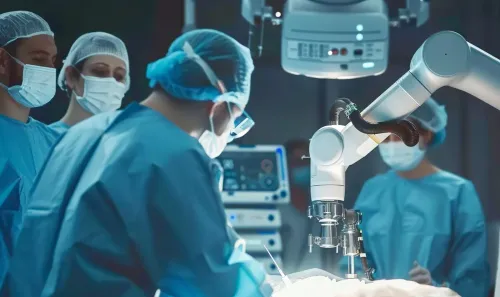
A robotic operation uses the same small abdominal ports as laparoscopy, but the surgeon controls wristed instruments from a console. This provides steadier movement, three-dimensional magnified vision and easier suturing in a narrow pelvis.
Open surgery uses one larger incision and gives direct hand access, which remains valuable when rapid access, extensive disease or complications demand it.
| Option | Access and movement | Time, recovery and complications | Availability and cost |
|---|---|---|---|
| Robotic | Small ports; wristed instruments improve pelvic reach and fine control. | Operating time can be longer, especially early in a team’s experience. Recovery is often similar to, or quicker than, laparoscopy, but bleeding, leaks, infection, clots, bowel blockage and nerve injury remain possible. | Fewer equipped hospitals and trained teams; usually the highest cost. |
| Laparoscopic | Small ports; straight instruments and less flexible movement. | Often efficient for suitable anatomy, with faster recovery than open surgery. The same colorectal complications apply. | More widely available; usually less expensive than robotic surgery. |
| Open | One larger incision; direct hand access. | Often more postoperative pain and a longer hospital and activity recovery period. The underlying disease and operation still drive complications. | Widely available; usually the lowest operating-platform cost. |
The choice is not automatically robotic versus inferior surgery. Advanced laparoscopy colorectal surgery pune searches may describe excellent laparoscopic colectomy, difficult adhesiolysis or intracorporeal bowel reconnection without a robot. Ask for the named operation, expected conversion risk and total estimate, including hospital stay, consumables and possible stoma care.
Who is a suitable candidate, and when is another approach safer?
Patients searching for advanced robotic colorectal for surgery Pune need a named operation, not a platform label. Robotic assistance may suit planned right or left colectomy, sigmoidectomy, rectal resection with total mesorectal excision, rectopexy, or selected diverticular and inflammatory bowel disease.
It can help with precise dissection in a deep, narrow pelvis, but anatomy never guarantees a robotic approach.
| Clinical setting | Robotic assistance may fit | When another approach is safer |
|---|---|---|
| Planned colorectal cancer | Stable patient with resectable disease and suitable anatomy | Open or laparoscopic access if imaging shows extensive invasion or reconstruction is unsafe |
| Deep pelvic or rectal disease | Narrow pelvis or difficult pelvic angles requiring careful dissection | Individual assessment after MRI, especially after radiation, prior pelvic surgery or dense adhesions |
| Diverticular disease or inflammatory bowel disease | Controlled inflammation with a clearly defined resection | Delay or a different operation during severe active inflammation, abscess or hostile tissue |
| Emergency presentation | Selected stable obstruction after resuscitation and imaging | Immediate open access for perforation, faecal peritonitis, uncontrolled bleeding, severe distension or shock |
The team must also assess whether you can tolerate general anaesthesia and abdominal insufflation. Severe heart or lung disease, widespread adhesions, an unsafe blood supply, unexpected tumour spread or organ injury can require conversion to an open incision. Conversion protects you when progress becomes unsafe; it is not a failed operation.
Ask about that possibility, temporary stoma risk and the hospital’s capacity for transfusion, intensive care and reoperation.
What should you ask a colorectal team in Pune before deciding?
Ask for the operation’s exact name, not simply “robotic surgery”: right colectomy, sigmoidectomy, low anterior resection, abdominoperineal resection or another procedure. Ask how many operations of that type the surgeon and core team perform each year, their conversion-to-open rate, and the expected chance of a temporary ileostomy or permanent stoma.
Use this checklist during consultation:
- What is included in robotic surgery for my case: lymph-node removal, bowel reconnection, protective stoma, ICG fluorescence imaging or intraoperative endoscopy?
- How will you assess and manage an anastomotic leak, bleeding, infection or ureter injury?
- If I need ICU care, reoperation or conversion to open surgery, which hospital team provides it?
- Who marks and teaches stoma care before surgery, and what determines reversal?
- Which pathology findings would change treatment after surgery?
If you searched advanced robotic colorectal for surgery pune, compare the programme rather than the machine:
| Robotic platform | Complete colorectal programme | What to verify |
|---|---|---|
| Console, camera and instruments | Diagnosis, staging, surgery and follow-up | Named operation and outcomes |
| Surgeon-controlled movement | Colorectal, anaesthesia, ICU and stoma support | Leak, bleeding and reoperation plans |
| Technology available for selected cases | Backup for conversion and complications | Emergency access and staffing |
Dr Kulkarni- Advanced LAPAROSCOPY, Colorectal & ROBOTIC Surgery Clinic should be assessed with these same questions; the answers show what is included beyond the equipment. A robotic platform can assist surgery, but it cannot replace colorectal experience, hospital backup or structured stoma planning.
Related service
Advanced LAPAROSCOPY, Colorectal & ROBOTIC Surgery Advanced LAPAROSCOPY, Colorectal & ROBOTIC Surgery Advanced Laparoscopic, Colorectal & Robotic Surgery Services by Dr. Suprashant Kulkarni Dr. View service → |
Frequently asked questions
Which operations and reconstruction are included in robotic colorectal surgery?
Procedures can include colectomy, rectal resection, cancer lymph-node removal, vessel control and reconnection of the bowel. Some patients need a temporary or permanent stoma instead of immediate reconnection.
What happens from consultation to follow-up?
The process includes diagnosis review, staging or imaging when needed, surgical planning, preoperative assessment, the operation, hospital recovery, pathology review and scheduled follow-up.
How does robotic surgery compare with laparoscopy and open surgery?
Robotic and laparoscopic surgery use small ports, while open surgery uses a larger incision. The best approach depends on tumour location, anatomy, prior operations, disease severity and safety during reconstruction.
Who is a suitable candidate for robotic colorectal surgery?
Candidates are assessed individually using the diagnosis, tumour location, anatomy, general health, previous abdominal surgery and the complexity of reconstruction. Robotic surgery is not automatically safer for everyone.
When is another approach safer than robotic surgery?
Open or laparoscopic surgery may be safer when urgent treatment, extensive disease, difficult anatomy, severe adhesions or uncontrolled bleeding makes robotic access unsuitable.